
The 14th National People's Congress (NPC) opens its second session at the Great Hall of the People in Beijing, capital of China, March 5, 2024. Xi Jinping, Li Qiang, Wang Huning, Cai Qi, Ding Xuexiang, Li Xi and Han Zheng were present at the opening meeting. (Xinhua/Li Xueren)
- Two Sessions open amidst an atmosphere of cautious optimism
The Pan Afrikanist Watchman
Not the snow or cold weather could dampen the palpable sense of enthusiasm among Deputies and thousands of representatives and foreign dignitaries that thronged the Great Hall of the People in Beijing, China, Tuesday March 5th, 2024.
The occasion was the opening of the meeting of the second session of the 14th National People’s Congress (NPC) – the highest legislative body of China.

It was preceded by the opening of the specialised advisory body – the Chinese People’s Political Consultative Conference (CPPCC) the previous day, March 4th – marking the start of China’s political season famously known as the ‘Two Sessions’.
President Xi Jinping, who doubles as the General Secretary of the Communist Party of China (CPC), and is also responsible for the guiding Thought on Socialism with Chinese Characteristics for a New Era, which informs policies, laws and programmes – graced both events.
Chinese Premier Li Qiang kicked off the meeting of the NPC by presenting a report on the work of government for the year 2023. Its salient highlights pointed to a thriving economy; deepening of reforms and opening up; ecological conservation and environmental protection; and research and innovation outputs, among others.
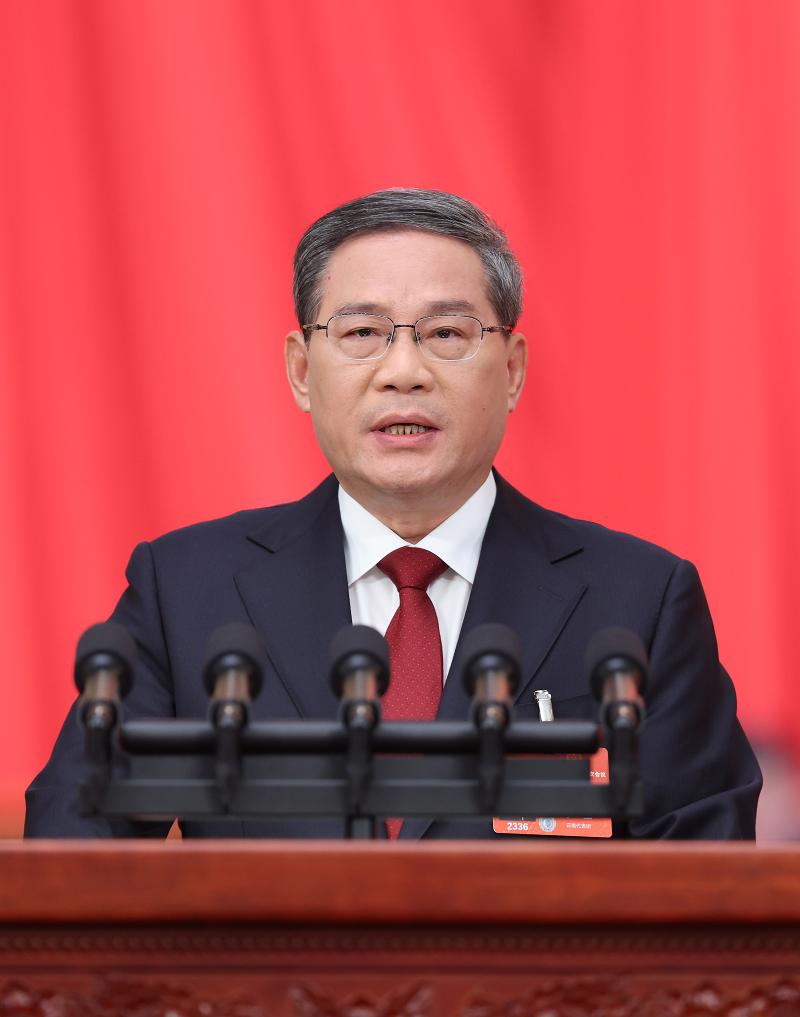
The Premier, Li Qiang enumerated some of these highlights in following manner:
—Overall economic recovery and growth were boosted
China’s gross domestic product (GDP) surpassed 126 trillion yuan, an increase of5.2 percent, ranking China among the fastest-growing major economies in the world. A total of 12.44 million urban jobs were added, and the average surveyed urban unemployment rate stood at 5.2 percent. The consumer price index (CPI) rose by 0.2 percent. A basic equilibrium was maintained in thebalance of payments.
—Significant progress was made in building a modernized industrial system
Traditional industries saw accelerated transformation and upgrading, strategic emerging industries achieved vigorous growth, and ground work was laid for developing industries of the future. Advanced manufacturing was further integrated with modern services, and a number of world-class innovations were made in major industries.
C919, a homemade airliner, went into commercial operation, and a domestically-built large cruise ship was delivered. China accounted for over 60 percent of global electric vehicle output and sales.
—New breakthroughs were made in scientific and technological innovation
Major headway was made in establishing a system of national laboratories and achieved fruitful results in developing core technologies in key fields. Substantial progress was made in the research and development (R&D) of high-end equipment, such as aircraft engines, gas turbines, and 4th-generation nuclear power units.
A stream of innovations emerged in frontier areas such as artificial intelligence(AI)and quantum technology. The volume of contracted technology transactions grew by 28.6 percent. These achievements have further enhanced the capacity for innovation-driven development.
—Reform and opening up were deepened
The latest round of institutional reform at the central government level was generally completed, and such reform at the local government level proceeded in a well-planned way.
“We stepped up efforts to build a unified national market, launched an initiative to deepen and upgrade state-owned enterprise (SOE) reform, and adopted policies to spur the growth of the private sector”, Li said.
The layout of pilot free trade zones was further improved, and the global market share of China’s exports remained stable. The mix of utilized foreign investment was improved; the Belt and Road Initiative cooperation gained greater international influence and appeal.
—The foundations for secure development were further consolidated
Grain output reached a record of 695 million metric tonnes. The supply of energy and resources remained stable. China’s important industrial and supply chains became more self-supporting and related risks were better controlled. Steady progress was made in defusing major economic and financial risks. Infrastructure was further modernized.
—The environment saw steady improvements
Thanks to further steps to prevent and control pollution, the discharge of major pollutants continued to fall and the quality of surface water and offshore water continued to improve.
The shelterbelt programme in northeast, north, and northwest China entered a crucial stage. China’s installed renewable energy capacity surpassed its thermal power capacity for the first time in history, and China accounted for over half of newly installed renewable energy capacity worldwide.
—People’s wellbeing was ensured
Per capita disposable income of residents increased by 6.1 percent, and the income gap between urban and rural residents continued to narrow. The gains of poverty elimination were consolidated and expanded, with per capita income in rural areas that have been lifted out of poverty growing by 8.4 percent.
“We increased subsidies for compulsory education, basic old-age insurance, and basic medical insurance and expanded the coverage of assistance and support”.
Over 66 million taxpayers benefited from an increase in the special additional deductions for individual income tax, which cover children nursing expenses, children’s education, and elderly care expenses.
“We redoubled efforts to renovate old urban residential compounds and develop government-subsidized housing, benefitting over 10 million households”, Li said.
However, the Premier also mentioned some of the inhibitions that impacted the local economy, such as the global economic growth lacking steam, and the regional hotspot issues that kept erupting.
Li said this has made China’s external environment more complex, severe, and uncertain.
He noted that the foundation for China’s sustained economic recovery and growth is “not solid enough”, citing the lack of effective demand, overcapacity in some industries, low public expectations, and many lingering risks and hidden dangers- as examples.
“There are blockages in domestic economic flows, and the global economy is affected by disruptions”, he pointed out, explaining further that some small and medium-sized enterprises face difficulties in their operations.
“We are confronted with both pressure on overall job creation and structural employment problems”, adding that there are still many weak links in public services and that some primary-level governments are facing fiscal difficulties.
China’s capacity for scientific and technological innovation needs to be further improved, Li said, noting that some government officials lack the readiness to get down to work, evade responsibilities, and do their work in a perfunctory way.
“Corruption remains a common problem in some sectors”, he noted but assured that, “we will face these problems and challenges head-on, make every effort to deliver, and do our utmost to live up to the expectations and trust of the people”.
With this background, Li presented the NPC’s proposals for the overall requirements and policy orientation for economic and social development in 2024.
He noted that the year 2024 marks the 75th anniversary of the People’s Republic of China, and is also a crucial year for achieving the objectives and tasks laid down in the 14th Five-Year Plan.
He said in order for the government to deliver, it is important, under the strong leadership of the Party Central Committee with Comrade Xi Jinping at its core, to do the following:
- Follow the guidance of Xi Jinping Thought on Socialism with Chinese Characteristics for a New Era
- Implement the guiding principles from the Party’s 20th National Congress and the Second Plenary Session of the 20th Party Central Committee
- Act on the guidelines of the Central Economic Work Conference
- Adhere to the general principle of pursuing progress while ensuring stability
- Fully and faithfully apply the new development philosophy on all fronts, move faster to create a new pattern of development, and promote high-quality development
- Deepen reform and opening up across the board
- Achieve greater self-reliance and strength in science and technology
- Strengthen macro regulation
- Expand domestic demand and deepen supply-side structural reform
- Promote new urbanization and all-around rural revitalization in a coordinated way
The six-day meetings of the Two Sessions end March 10th.
(C) TPA


