
By Donald Molosi*
In Botswana, we are taught to bow before we are taught to stand. Hear me out.
The bow is subtle. It is in the softened voice. The lowered gaze. The bending of the knee. The careful insertion of “rra” and “mma” before a name. It is in the smiley choreography of family, where the young wait for permission to breathe. Respect is our national religion. And like all religions, it has saints. It also has excess.
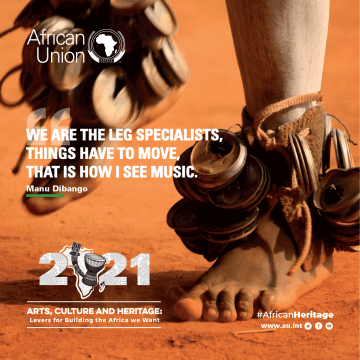
In Setswana culture, age has never been incidental. It is architecture. The traditional age set system, mephato, once organized society into cohorts that moved together through rites of passage, including bogwera for boys and bojale for girls. These were not mere ceremonies but schools of discipline and duty.
These rites bound young people to one another and to their shared community. In the kgotla, the public assembly presided over by the chief, elders spoke first and longest, and youth listened. The hierarchy was clear. So was the belonging.
Those structures had purpose. They cultivated continuity. They transmitted memory. They made a village feel like a lineage rather than a collection of strangers.
But somewhere between reverence and rigidity, we built a culture that struggles to distinguish age from wisdom.
Today, in boardrooms in Gaborone and cattleposts in Tewane, we continue to equate longevity with insight. A man who has simply survived six decades is treated as if he has mastered them.
A woman who has been home-wrecking for forty years is presumed to understand marriage simply because she now has failing knees. The absurdity is almost theatrical. Bureaucrats who have never built anything beyond their own CVs are asked to mentor entrepreneurs.
We do not interrogate their record. We count their years.
This is not tradition. It is laziness disguised as culture.
Botswana’s founding generation, figures like Seretse Khama and Quett Masire, were indeed elders, but they were also builders. Their authority did not rest on wrinkles. It rested on vision. They were not obeyed because they were old. They were respected because they were consequential.
What we have inherited instead is a distortion of that ethic. In contemporary Botswana, deference is often extreme, even self effacing. A young Motswana can struggle to disagree without apology, to critique without kneeling linguistically.
We confuse politeness with submission. We perform humility until it becomes
humiliation. Who does it benefit?
And then there is our obsession with titles.
We love prefixes in Botswana. Rra Doctor. Mma Professor. Degrees are paraded as though they were medals won in battle rather than certificates of sustained study. I say this as someone who holds a doctorate and refuses to use the title publicly. A PhD does not certify intelligence.
It certifies endurance. It means I was stubborn enough or passionate enough to spend a decade reading footnotes, researching and writing articles. It does not necessarily make me wiser than the mechanic who understands engines or the grandmother who has negotiated peace in her household for thirty years.
Yet in our society, the mere acquisition of degrees can vault a person into unearned authority. Even fools get PhD’s and suddenly are asked to weigh in on real things.
We treat academic achievement as moral achievement. We rarely ask what you have done with that knowledge. Whom have you lifted. What have you built. Apart from submitting a dissertation.
We are, in this way, both ageist and elitist. We privilege the old over the young and the credentialed over the competent. It is a double hierarchy that suffocates innovation. The youngest voice in the room is often the most cautious, even when it is the most perceptive.
The tragedy is that this culture of deference breeds mediocrity at every level. When elders are insulated from critique, they do not sharpen themselves. When youth are conditioned to suppress dissent, they do not sharpen either. We create a society in which honesty feels like rebellion. How uninspiring.
I have watched young Batswana with global fluency, artists, coders, activists, reduce themselves in the presence of elders who have never navigated the worlds these young people inhabit.
I have seen brilliant twenty five year olds apologize for their ambition. I have seen sixty year olds weaponize proverbs to silence debate since they are older.
This is our other side.
The irony is that our traditional systems were not meant to produce paralysis. The age set system moved cohorts forward together. It did not freeze them beneath their predecessors.
Each mophato had its moment of ascendancy. Authority shifted with time. Respect did not mean eternal subordination. It meant eventual succession.
We have kept the reverence and forgotten the rotation.
To reject condescension is not to reject culture. To demand accountability from elders is not to dishonor ancestors. It is to honor them properly. It is to insist that wisdom must be demonstrated, not assumed.
The new generation of Batswana must refuse the script that says youth equals ignorance. They must practice a different kind of respect, one that is neither absurd nor self erasing.
They must speak clearly in the kgotla and in the conference room. They must ask elders not only what they remember, but what they have learned.
And elders, if they are wise, will welcome that scrutiny.
A nation cannot grow if its young are perpetually kneeling. Botswana has built a reputation for stability, for order, for civility. But stability without introspection calcifies. Order without meritocracy corrodes.
I will continue to greet my elders properly. I will continue to cherish Setswana proverbs and the memory of age sets moving like disciplined regiments into adulthood.
But I will not pretend that age alone sanctifies opinion. I will not bow to titles as though they confer virtue.
If Botswana is to mature into its next chapter, we must separate reverence from fear, education from elitism, age from authority.
We must learn, finally, how to stand while we bow.
* Donald Molosi is executive producer and writer of “Partly Cloudy & Hot” an Oscar-qualifying film starring Kaone Kario. He writes from Mahalapye.
Donald Molosi,
Actor | Writer | President of Upright African Movement.
@ActorDonald


